Focused on the dust that matters most

PureFibe™ Composite Filtration is a multi-layer filter material for the finest respirable dust. It captures fine particles and holds them inside the media, so they do not return to the air people breathe. Developed for professional nail work, it can be made into a filter of any shape for any machine that moves air.

A cylindrical pleated filter cartridge with copper-coloured PureFibe media and grey end caps
≥ 99.5 %
of particles captured at 0.3 µm, the size that is hardest for any filter to stop.
0.8–2.5 µm
the respirable nail-dust fraction the material is designed around.
Multi-layer
composite media with a protective mesh and a support layer, supplied flat or formed into any filter shape.

The dust you can see is not the dust that matters

A clean desk after a service proves very little. The particles that stay airborne, travel through the breathing zone and reach deep into the lungs are far smaller than anything you can see. PureFibe™ is rated at the one size every particle filter finds hardest, and is designed around the fraction that matters for daily exposure.

Particle size scale from 0.1 to 100 micrometres PureFibe is rated at 0.3 micrometres, the hardest size to capture. Respirable nail dust at 0.8 to 2.5 micrometres is the design focus. Particles under 2.5 micrometres pose the greatest health risk and particles under 10 micrometres can reach deep into the lungs. 86 percent of nail dust is under 5 micrometres. Visible desk dust and a human hair at about 70 micrometres are much larger. Visible dust 0.1 µm 0.3 1 2.5 10 100 µm Particle diameter, logarithmic scale 0.3 µm: the rating point PureFibe™ captures ≥ 99.5 % of particles this size 0.8–2.5 µm: respirable nail dust, the design focus PM2.5: greatest risk to health PM10: reaches deep into the lungs 86 % of nail dust is under 5 µm Human hair, about 70 µm

Scroll the scale sideways to see the full range.

Why 0.3 µm. Particles around this size slip past the two ways fibres catch dust: they are too small to be stopped by inertia and too large to be pushed into fibres by diffusion. A rating at 0.3 µm is therefore a worst-case figure. Larger respirable nail dust is captured more effectively still.

Where the risk is. The US EPA defines fine particles as 2.5 µm and smaller and notes that they pose the greatest risk to health; particles up to 10 µm can get deep into the lungs. A human hair is about 70 µm across.

What nail dust is. Filing produces particles from 0.1 to 100 µm, and research on nail dust found that 86 % of them are smaller than 5 µm, small enough to reach the alveoli. Read more about fine dust and its sources.

What it captures

Nail dust is not one powder. A service produces natural nail and skin particles, gel and builder filing dust, acrylic and polygel dust and, in pedicure work, skin. PureFibe™ is built for the fine fraction of all of these, and it partially absorbs procedure odours.
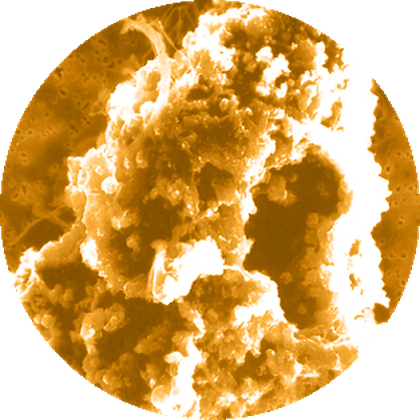
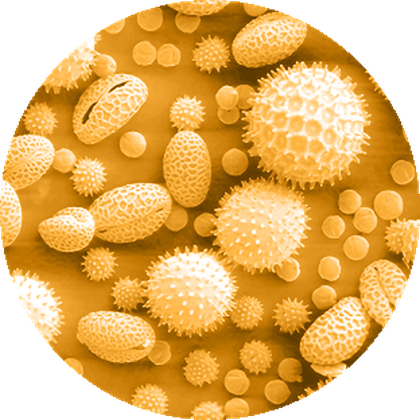
Microscope view of nail and skin dust particles
Nail and skin dustFrom filing, refining and removal, and from foot care
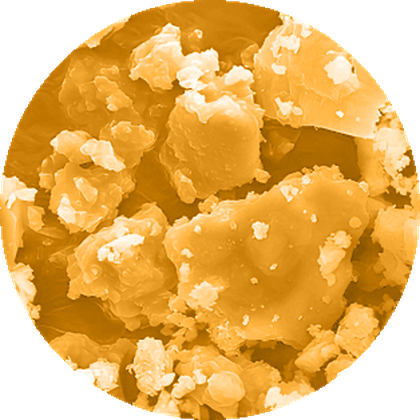
Microscope view of synthetic filing dust
Synthetic filing dustGel, builder gel, acrylic and polygel particles
Microscope view of pollen-like allergen particles
AllergensFine airborne particles that irritate skin, eyes and airways
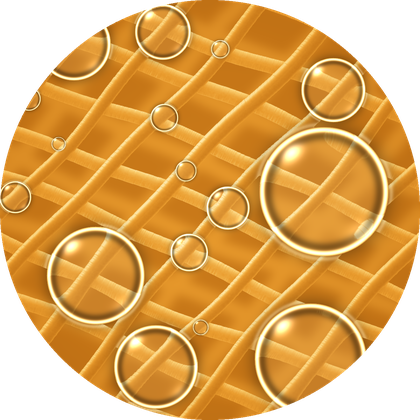
Illustration of vapour droplets held on the surface of filter fibres
Procedure odoursVapour molecules, partially held on the fibre surfaces
Cutaway of an upright dust collector showing air drawn in through the base, passing through the PureFibe cartridge and leaving clean at the top
A PureFibe™ cartridge inside an upright dust collector

What happens to the dust

A dust collector has three jobs, and a good filter material has to do the last two without undoing the first.

  1. Air is drawn in The machine pulls airborne dust away from the work zone and into the filter. This only works if the filter does not choke the airflow, which is why PureFibe™ elements are pleated for surface area.
  2. Fine dust is stopped The composite media captures the fine fraction, rated at ≥ 99.5 % for 0.3 µm particles. The larger respirable nail dust is captured more effectively still.
  3. It stays held The material is designed to hold dust inside the media rather than let it work loose, so performance does not collapse as the filter loads and the dust does not return to the working zone.

One material, any shape of filter

PureFibe™ is supplied flat for machines that pull air through a panel, or formed into pleated cartridges, rings and custom geometries for other air paths. The two elements pictured are already in production for professional nail dust collectors; they are examples of what the material can become, not the limit of it.

A pleated cartridge element made with PureFibe media

Pleated cartridge

For upright machines with a vertical air path. A large media area folded into a compact cylinder.

A pleated ring element made with PureFibe media, with a foam seal

Pleated ring

For shallow housings that draw air in around a circumference, such as hood and arm-mounted collectors.

Forms, machine types and reference implementations

PureFibe™ for your product

We supply the material as media and as finished elements, and develop elements to fit a housing. Dust collectors, vacuum cleaners, air cleaners: tell us about the machine.

Get in touch